The Northeast Chinese Meme That Found a Second Life as a Video Game
In 2016, two groups of Chinese livestreamers began feuding on Kuaishou, a short-video platform popular in China’s countryside and lower-tier cities. Their leaders, Brother Hu and Captain Shamate, were both grassroots streamers from Northeast China, or Dongbei. Video after video, they traded insults, accusations, and challenges. These gang-style exchanges were loud, theatrical, and unmistakably regional, full of Northeastern Chinese dialects, bravado, and the kind of chaos that early Chinese livestreaming platforms thrived on.
The feud was widely believed to be staged, a scripted collaboration designed for dramatic effect. But that did little to diminish its appeal. Audiences couldn’t stop watching, and clips of the confrontations soon took on a life of their own. Over time, they spawned an influential body of memes that spread across various media, even video games, one of which has now become an unlikely hit on Steam.
The phenomenon emerged against the backdrop of Dongbei’s changing cultural identity. Once the heartland of China’s heavy industry, the region is often referred to as the country’s Rust Belt after decades of industrial decline. Locals have turned that history into both tragedy and comedy. TV dramas such as “The Long Season” have tapped into nostalgia for the region’s industrial heyday, helping make the “Dongbei Renaissance” a cultural buzzword. Northeasterners have long played an outsized role in Chinese comedy. On television, Zhao Benshan’s sketches made the Northeastern accent familiar to audiences nationwide; on Kuaishou, Northeastern dialects and slang became a rich source of humor and memes.
It was in this context that the feud between Brother Hu and Captain Shamate gained traction. Fans recorded and reposted clips to streaming site Bilibili, where they were remixed, quoted, and jokingly treated as “classics.” The saga became known as “Once Upon a Time in Dongbei.”
Seven years later, those memes were turned into a video game. A Summer in Northeast China (DongBeiZhiXia), released for free on Steam on Jan. 9, 2023, was developed and published by Zhuangbuchun Studio, led by Zhuangbuchun, a Bilibili content creator with over 2 million followers. Up till today, the game has since accumulated more than 12,000 positive reviews on Steam, earning an “Overwhelmingly Positive” rating despite being available only in Simplified and Traditional Chinese. Its success shows just how far a regional internet joke can travel when platform dynamics, an existing fan community, and a developer’s instincts align at the right moment.
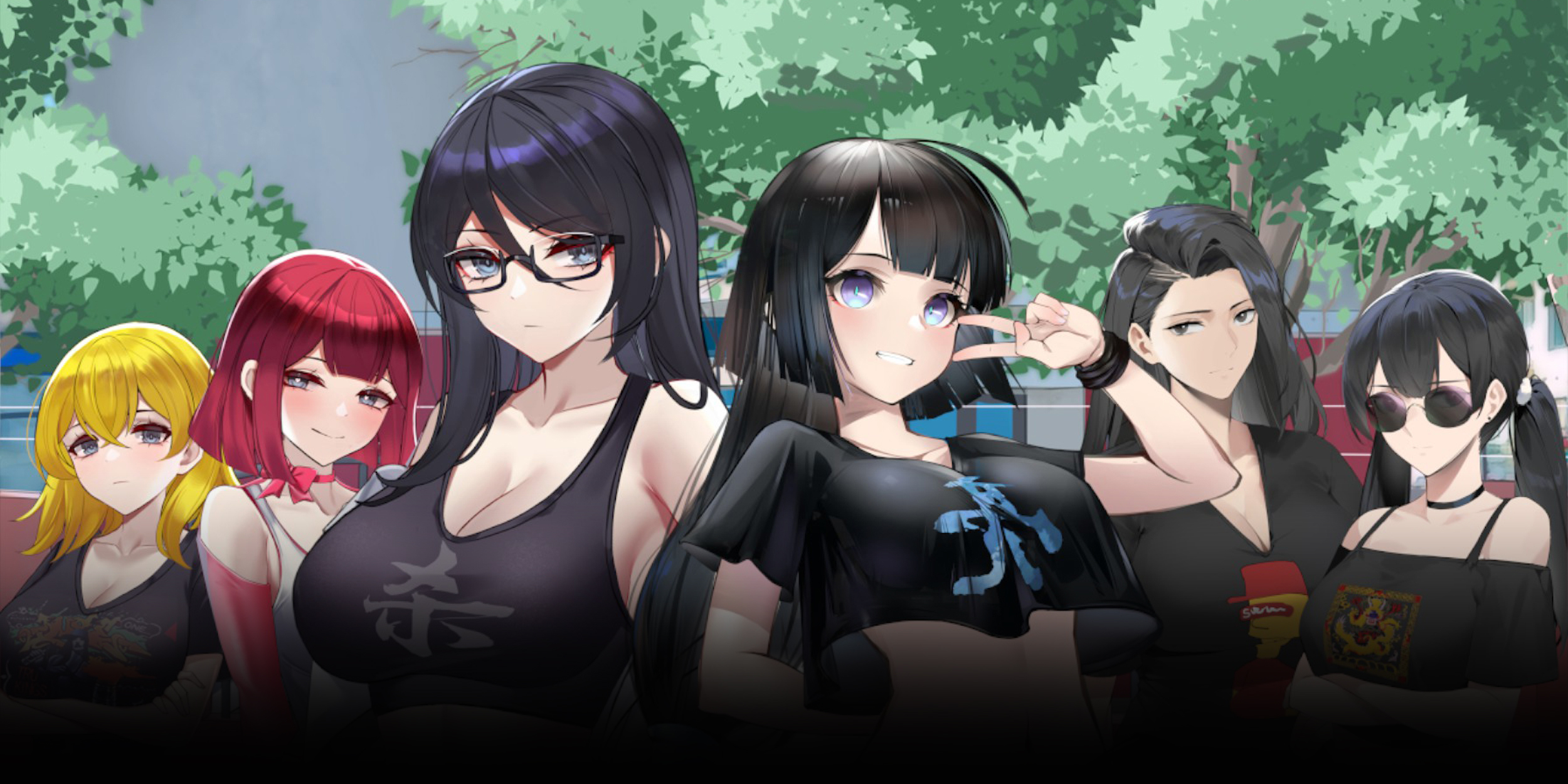
A Summer in Northeast China is a “gal game,” a genre typically centered on interactions with female characters. Set years after the original Kuaishou incidents, the game follows Xiaoliang, who must recover her memories with the help of a cast of female companions, each loosely inspired by figures from the “Once Upon a Time in Dongbei” phenomenon. The game’s most conspicuous adaptation is its gender-swapping: the male roles at the center of the original memes are reimagined as women, retaining their names, signature visual traits, and personalities while being reshaped to fit the conventions of the gal game and ACGN (anime, comics, games, and novels) aesthetics.
In effect, the game translates its source material across cultural registers. “Once Upon a Time in Dongbei” ran on masculine confrontation, local bravado, and the rough-edged authenticity of Kuaishou livestreaming. A Summer in Northeast China recasts that material through the softer, character-driven lens of the gal game, while keeping enough recognizable references to reward those who remember the source. Events from the original memes return as callbacks for longtime fans, while the first-person linear narrative gives newcomers an accessible way into Xiaoliang’s story.
The game also draws on subcultures Zhuangbuchun knows well, including shamate — a Chinese youth subculture known for its flamboyant hairstyles and fashion — and otaku — intense fandom of anime, manga, games, and related media, originating in Japan — while its use of Northeastern dialect keeps it rooted in Dongbei. Together, these influences reflect the game’s broader approach: combining distinctly Northeastern humor and internet culture with the appeal of manga and anime.
Zhuangbuchun made the game the way many Chinese indie developers do: on a limited budget and in public. The project was self-funded, with a crowdfunding campaign on domestic creator-sponsorship platform Afdian covering part of the cost. He handled much of the design and direction himself, outsourced some work, and recruited voice actors for the female cast.
But developing the game in public was not simply a funding strategy. It also became central to how Zhuangbuchun built an audience around the project. Nearly a year before the game’s launch, in April 2022, he posted a video announcing his gender-swapped take on “Once Upon a Time in Dongbei.” The video received over 1.5 million views, 71,000 likes, 23,000 saves, and 11,000 reposts.
From there, Zhuangbuchun kept followers closely involved in development. He posted early character designs, solicited feedback on voice acting, and explained delays. When viewers complained about an accent or suggested a different look, he listened and sometimes changed the game accordingly. In that sense, the project was not simply marketed to its eventual players. It was partly shaped by them.
Zhuangbuchun also visited Shenyang, the capital of the northeastern Liaoning province, several times to document where the original Kuaishou events took place. On one return trip after the game’s release, he even ran into some of its fans. These travel vlogs reinforced the sense that the game was being made by someone invested not only in the memes but also in the places and culture from which they emerged.
The steady updates kept the project visible on Bilibili and positioned Zhuangbuchun as part of the internet culture that turned the original Kuaishou videos into “Once Upon a Time in Dongbei.” His existing followers helped attract attention, while the project’s local roots kept audiences engaged. The original Kuaishou streamers added another layer to this relationship, posting reaction videos and engaging with Zhuangbuchun’s posts, further blurring the line between the game and the people who inspired it.
A Summer in Northeast China is neither the first game to adapt internet memes nor the first to blend Chinese regional culture with global subcultural aesthetics. What makes it unusual is the particular combination: a free gal game with a gender-swapped cast, a distinctly Northeastern setting, a developer who was already a prominent Bilibili creator, and source material rooted in the unruly world of early Kuaishou livestreaming.
For indie developers working with limited resources, A Summer in Northeast China offers a distinctive example of how online culture can move across platforms and media. The same platforms that provided the game with its source material also supplied an audience, feedback, publicity, and a community willing to participate in its development. Rather than simply adapting an existing meme, Zhuangbuchun used the participatory culture surrounding it to carry the material far beyond its origins.
That process creates tensions between local authenticity and internet marketability, and between the crude energy of the original memes and the game’s polished presentation. Yet, A Summer in Northeast China never loses sight of its regional origins. Zhuangbuchun, who has told me he loves Dongbei despite not being from the region, is part of that story: an outsider drawn into its culture who now helps reshape it for new audiences. The game has traveled from Kuaishou to Bilibili to Steam, changing along the way. But for all the distance it has traveled, it has never really left Northeast China.
Zhu Siheng, a Ph.D. candidate at the University of Rochester, and Han Yisong, a postdoctoral researcher at the City University of Hong Kong, also made contributions to this research.
(Header image: Promotional art for the video game “A Summer in Northeast China” on Steam.)